- Your cart is empty
- Continue Shopping


The Wisdom of the Prophets | Fusus al Hikam | Ibn al-Arabi | Selections
The Wisdom of the Prophets | Fusus al Hikam | Ibn al-Arabi | Selections
Featured

₨ 1,250
Urdu Title: فصوص الحکم انگریزی ترجمہ
Author: Shaykh al-Akbar Muhyiddin Ibn al-Arabi
Publisher: Suhail Academy
Pages: 160
Language: English
Binding: Hardbound مجلد
Weight: 0.50 kg
Availability: Out of stock
The Wisdom of the Prophets (Arabic: Fusus al-Hikam, literally “The Ringstones of Wisdom”) is widely considered the “magnum opus” of the Great Sheikh, Muhyiddin Ibn al-Arabi. Written in 1229 CE (627 AH) in Damascus, it is perhaps the most influential and commented-upon text in the history of Sufi metaphysics.
Book Description
According to Ibn al-Arabi, the book was not “composed” in the traditional sense; rather, he received it in a vision of the Prophet Muhammad, who handed him a book and commanded him to “take it and bring it out to the people that they may benefit by it.”
The work is structured into 27 chapters, each dedicated to a specific Prophet (from Adam to Muhammad). Each prophet represents a “Fas” (a bezel or ringstone) through which a unique facet of Divine Wisdom is uniquely manifested. It is a dense, highly symbolic, and intellectually rigorous summary of his entire metaphysical system, focusing on the relationship between God, the Universe, and Humanity.
Key Points
1. Oneness of Being (Wahdat al-Wujud)
While the term itself is not used in the text, the concept permeates every page. Ibn al-Arabi posits that there is only one true Reality (the Absolute), and all created things are various “self-disclosures” (tajalliyat) or mirrors reflecting the Divine Names and Attributes.
2. The Perfect Human (al-Insan al-Kamil)
The “Perfect Human” is the bridge between the Creator and the created world. As the microcosm of the universe, the human being contains all the Divine Names. The Prophets are the primary examples of this realization, serving as the “pupil of the eye” through which God views His creation.
3. The Bezels of Wisdom
Each chapter explores a specific “Wisdom” associated with a Prophet’s spiritual nature:
Adam: The Wisdom of Divinity (The origin of humanity).
Noah: The Wisdom of Transcendence (The tension between unity and multiplicity).
Abraham: The Wisdom of Rapturous Love (The intimacy between Creator and creature).
Moses: The Wisdom of High Eminence (The law and the direct encounter).
Muhammad: The Wisdom of Singularity (The synthesis of all previous wisdoms).
4. The Divine Names
Everything in existence is a manifestation of a specific Divine Name (e.g., The Merciful, The Just, The Provider). The book explains how these names “demand” a locus of manifestation, leading to the creation of the world as we perceive it.
5. The Universality of Mercy
A recurring theme is the “all-encompassing nature of Mercy.” Ibn al-Arabi suggests that since everything originates from the Breath of the Merciful (Nafas al-Rahman), the ultimate return of all beings—regardless of their earthly state—is to a state of mercy and reconciliation with the Divine.
6. Creative Imagination (Khayal)
The Fusus explores the role of the “World of Images” (Alam al-Mithal), where spiritual realities take on form and formal realities are spiritualized. This is the realm where visions, dreams, and the true understanding of prophetic symbolism occur.
| Weight | 0.5 kg |
|---|
You must be logged in to post a review.
Related products
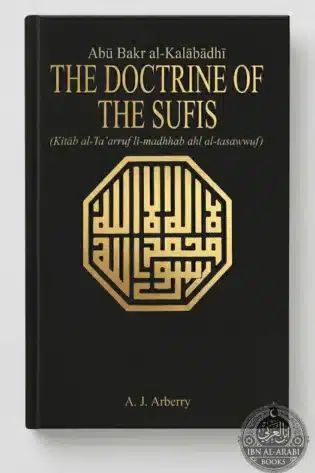
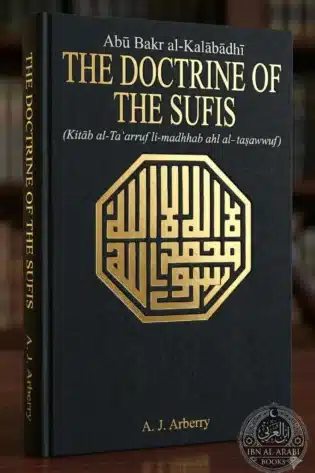
The Doctrine of the Sufis (Arabic: Kitab al-Ta’arruf li-madhhab ahl al-tasawwuf)
₨ 1,500Current price is: ₨ 1,500. Original price was: ₨ 1,800.
Save ₨250
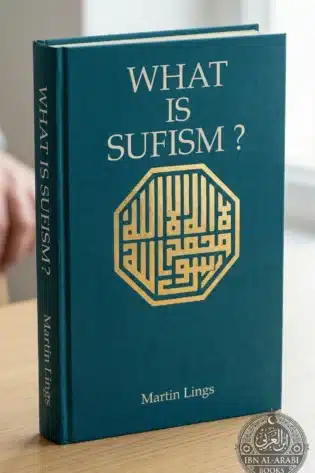
What is Sufism by Martin Lings
₨ 1,250Current price is: ₨ 1,250. Original price was: ₨ 1,500.
Reviews
There are no reviews yet.