- Your cart is empty
- Continue Shopping


Revelation of the Mystery | Kashf al-Mahjūb | ‘Alī Al-Hujwīri | کشف المحجوب | حضرت داتا علی ہجویری
Revelation of the Mystery | Kashf al-Mahjūb | ‘Alī Al-Hujwīri | کشف المحجوب | حضرت داتا علی ہجویری
Featured
₨ 2,200
Urdu Title: کشف المحجوب
Author: Ali B. Uthman Al- Jullabi Al- Hujwiri
Publisher: Suhail Academy
Pages: 472
Binding: Hardbound مجلد
Weight: 1 kg
Availability: Out of stock
Revelation of the Mystery is the English translation of Kashf al-Mahjub, the oldest and most celebrated Persian treatise on Sufism, written by Ali bin Usman al-Hujwiri (popularly known in South Asia as Data Ganj Bakhsh, d. 1072/1077 AD). The most famous English translation was completed by R.A. Nicholson in 1911.
Book Description
Written in response to a student’s request for a clear explanation of the “Path of Sufism,” Kashf al-Mahjub serves as both a historical record and a practical manual. Hujwiri provides a systematic defense of Sufism, proving its roots in the Quran and Sunnah while detailing the lives of early saints and the various “schools” of mystical thought.
The title itself, Kashf al-Mahjub (“Unveiling of the Veiled”), refers to the process of removing the “veils” of the ego and worldliness that prevent the human heart from witnessing the Divine Reality.
Key Highlights & Core Points
1. The Definition of Sufism (Tasawwuf)
The Concept: Hujwiri famously states that in earlier times, Sufism was “a reality without a name,” whereas in his day, it had become “a name without a reality.”
The Goal: He defines a Sufi as one who is “purified” by love and has reached the state of Fana (annihilation of the self) to subsist in God (Baqa).
2. The Doctrine of the “Saints” (Wilayah)
The Hierarchy: This book is one of the primary sources for the concept of the unseen spiritual hierarchy (the Awliya).
The Role: He describes the various ranks—the Abdal, Awtad, Nuqaba, and the Qutb (the Axis/Pole)—who maintain the spiritual equilibrium of the world.
3. The Twelve Schools of Sufism
Hujwiri categorizes the early Sufi movement into twelve distinct schools (ten “approved” and two “rejected”).
He analyzes their specific leanings, such as:
The Muhasibis: Focused on self-examination (Muhasabah).
The Tayfuris: Focused on spiritual intoxication (Sukr).
The Junaydis: Focused on sobriety (Sahw). Hujwiri himself favored this “sober” approach.
4. Removing the “Veils”
The latter half of the book is structured around eleven “veils” that the seeker must lift, including:
The Veil of Gnosis (Ma’rifat).
The Veil of Unification (Tawhid).
The Veil of Prayer (Salat).
The Veil of Love (Muhabbah).
For each, he explains the external ritual and its internal, spiritual significance.
5. The Ethics of the Path (Adab)
A significant portion is dedicated to the proper conduct of the dervish. This includes how to travel, how to eat, how to keep company, and the controversial practice of Sama (spiritual music/audition).
Hujwiri provides a balanced view of Sama, noting it is “permissible for the spiritual, but forbidden for the worldly.”
| Weight | 1 kg |
|---|
You must be logged in to post a review.
Related products
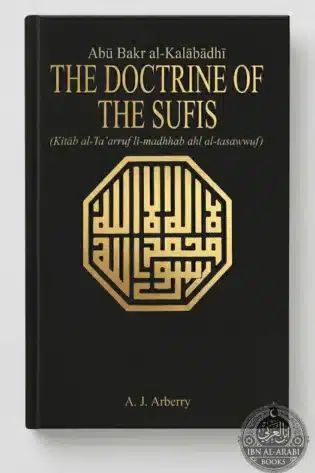
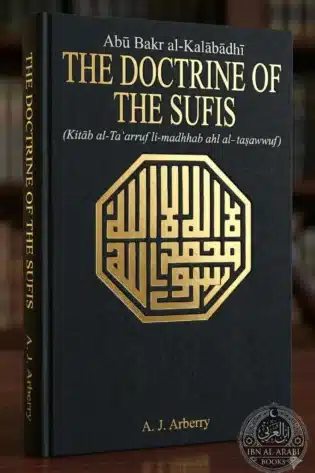
The Doctrine of the Sufis (Arabic: Kitab al-Ta’arruf li-madhhab ahl al-tasawwuf)
₨ 1,500Current price is: ₨ 1,500. Original price was: ₨ 1,800.
Save ₨250
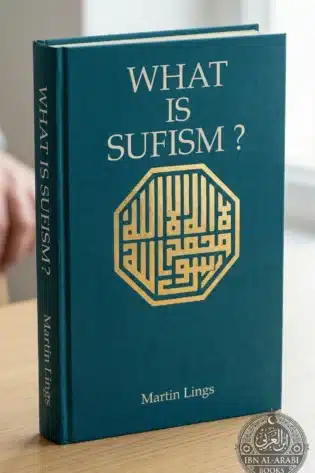
What is Sufism by Martin Lings
₨ 1,250Current price is: ₨ 1,250. Original price was: ₨ 1,500.
Reviews
There are no reviews yet.