- Your cart is empty
- Continue Shopping


Knowledge and the Sacred | Sayyed Hussain Nasr
Knowledge and the Sacred | Sayyed Hussain Nasr
Featured
₨ 1,150
English Title: Knowledge and the Sacred
Author: Seyyed Hossein Nasr
Publisher: Suhail Academy
Pages: 354
Volumes in Set: 1
Language: English
Binding: Hardbound مجلد
Weight: 0.50 kg
Availability: 1 in stock
Add to cart
Buy Now
Knowledge and the Sacred, based on Seyyed Hossein Nasr’s prestigious 1981 Gifford Lectures, is widely considered his most important intellectual contribution. It serves as a comprehensive “manifesto” for the restoration of the sacred dimension of knowledge in a world dominated by secular rationalism.
Book Description
In this work, Nasr argues that the modern world is suffering from a “desacralization” of knowledge. He traces the historical process by which Western thought separated “reason” from “revelation,” leading to a purely horizontal, materialist worldview.
To counter this, Nasr presents the concept of Scientia Sacra (Sacred Knowledge)—knowledge that is not merely information about the world, but a means of spiritual transformation and a direct “unveiling” of the Absolute. Drawing from the Perennial Philosophy and the Islamic tradition of Irfan, Nasr seeks to remind humanity that true knowledge is inseparable from the “Sacred” and is the key to our primordial identity.
Key Points
1. The Concept of Scientia Sacra
The central thesis is that there exists a “Sacred Knowledge” at the heart of every orthodox tradition. This knowledge is not reached through discursive logic alone but through Intellectual Intuition (the ‘Aql). It is the realization of the Unity (Tawhid) that underlies all diversity.
2. Critique of Modern Secularism
Nasr provides a devastating critique of the Renaissance and the Enlightenment, which he views as the moments when the West “divorced” its intellect from its spiritual roots. He argues that modern science and philosophy are “truncated” because they ignore the transcendent vertical dimension of reality.
3. The Perennial Philosophy (Sophia Perennis)
The book reinforces the idea that there is a “timeless wisdom” that has been expressed through various religious forms (Islam, Hinduism, Platonism, etc.). Nasr argues that while the “forms” change, the “essence” of this wisdom remains identical and is the only antidote to modern nihilism.
4. Tradition vs. Traditionalism
Nasr distinguishes between “Tradition”—which is the transmission of Divine Truth and its application to a human collectivity—and “Modernism,” which he defines as anything that denies the Transcendent. He argues that to be “traditional” is to be in harmony with the very nature of Reality.
5. The Sacred Character of Nature
A major theme is the “spiritual significance of nature.” Nasr posits that the environmental crisis is a direct result of viewing nature as a “machine” to be exploited rather than a “Book of Signs” (Ayat) to be contemplated. He calls for a return to a “sacred science” that respects the cosmic order.
6. Realization through Virtue and Art
Nasr emphasizes that sacred knowledge cannot be attained by the “profane” mind. It requires spiritual discipline and the cultivation of virtues (Ihsan). He also highlights the role of Sacred Art (like calligraphy or traditional architecture) as a necessary “support” for the soul to remember its Divine origin.
| Weight | 0.5 kg |
|---|---|
| Publisher | Suhail Academy |
You must be logged in to post a review.


Related products
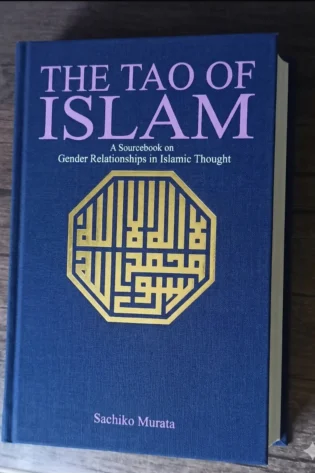
The Tao of islam
₨ 2,000
The Doctrine of the Sufis (Arabic: Kitab al-Ta’arruf li-madhhab ahl al-tasawwuf)
₨ 1,500Current price is: ₨ 1,500. Original price was: ₨ 1,800.
Save ₨250
Reviews
There are no reviews yet.