- Your cart is empty
- Continue Shopping


Encyclopaedia Of Islamic Spirituality | Two Volume Set
Encyclopaedia Of Islamic Spirituality | Two Volume Set
Featured

₨ 3,800
Urdu Title: اسلامی روحانیت کا دائرہ معارف – دو جلد سیٹ
Editor: Seyyed Hossein Nasr
Publisher: Suhail Academy
Pages: 1056
ISBN: 978-969-519-014-6
Binding: Hardbound مجلد
Weight: 1.50 kg
Availability: 1 in stock
Add to cart
Buy Now
The Encyclopedia of Islamic Spirituality (published as part of the World Spirituality: An Encyclopedic History of the Religious Quest series) is a monumental two-volume set edited by Seyyed Hossein Nasr. It stands as the most comprehensive collaborative effort by global scholars to map the “inward” dimensions of Islam.
Book Description
This set was created to provide a definitive response to the Western academic tendency to view Islam primarily through the lens of law (Shari’ah) and politics. Nasr and a team of over 40 renowned scholars (including Annemarie Schimmel, Titus Burckhardt, and William Chittick) present Islam as a living spiritual reality centered on the “Remembrance of God.”
Volume I: Foundations focuses on the roots of Islamic spirituality: the Quran, the Prophet Muhammad, the Sunnah, and the early development of Sufism and Shi’ite spirituality.
Volume II: Manifestations explores how this inner spirit branched out into various geographical regions (from Africa to China), as well as its expression in art, architecture, music, literature, and the “sciences of the soul.”
Key Points
1. The “Vertical” and “Horizontal” Dimensions
Nasr frames Islamic spirituality as having two axes: the Vertical (the relationship between the human and the Divine) and the Horizontal (the manifestation of that relationship in society, art, and nature). The set argues that one cannot understand Islamic civilization without understanding its spiritual core.
2. Quranic and Prophetic Roots
A major portion of Volume I is dedicated to proving that Sufism and “Irfan” are not foreign imports (as some early Orientalists claimed) but are the “heart-blood” of the Quranic revelation itself. It explores the spiritual significance of the Night Journey (Mi’raj) as the archetype for all mystical ascent.
3. Diversity of the “Inward” Path
The encyclopedia provides deep coverage of:
Sufi Orders (Turuq): The history and methods of the major lineages (Qadiriyya, Shadhiliyya, Naqshbandiyya, etc.).
Shi’ite Spirituality: The role of the Imams and the concept of “Walayah” (Divine Protection/Sainthood) in the Twelver and Isma’ili traditions.
Falsafa and Ishraq: How Islamic philosophy (Suhrawardi, Mulla Sadra) serves as a “spiritual way” rather than just an intellectual exercise.
4. Regional Spiritualities
Volume II tracks the spread of Islam’s “inner light” across the globe. It includes specialized chapters on the spirituality of the Maghrib, Southeast Asia, the Indian Subcontinent, and China, showing how the universal message of Islam adapted to local cultures without losing its essence.
5. Spirituality in the Arts and Sciences
The set breaks new ground by connecting “Irfan” to:
Sacred Art: How calligraphy, geometry, and mosque architecture are “frozen music” intended to induce a state of Dhikr.
Traditional Science: The spiritual basis of alchemy, astronomy, and medicine, where the study of the “Macrocosm” is seen as a way to know the “Microcosm” (the self).
6. The Human Condition and the Path
The work concludes with a focus on the Practical Way, detailing the stages of the soul (Maqamat), the nature of spiritual states (Ahwal), and the ultimate goal of “Extinction in God” (Fana) and “Abidance” (Baqa).
| Weight | 1.5 kg |
|---|
You must be logged in to post a review.
Related products


The Doctrine of the Sufis (Arabic: Kitab al-Ta’arruf li-madhhab ahl al-tasawwuf)
₨ 1,500Current price is: ₨ 1,500. Original price was: ₨ 1,800.
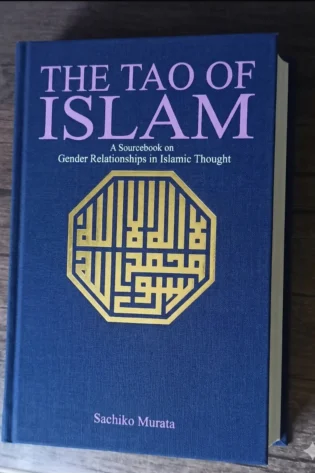
The Tao of islam
₨ 2,000
Save ₨250


Reviews
There are no reviews yet.