- Your cart is empty
- Continue Shopping


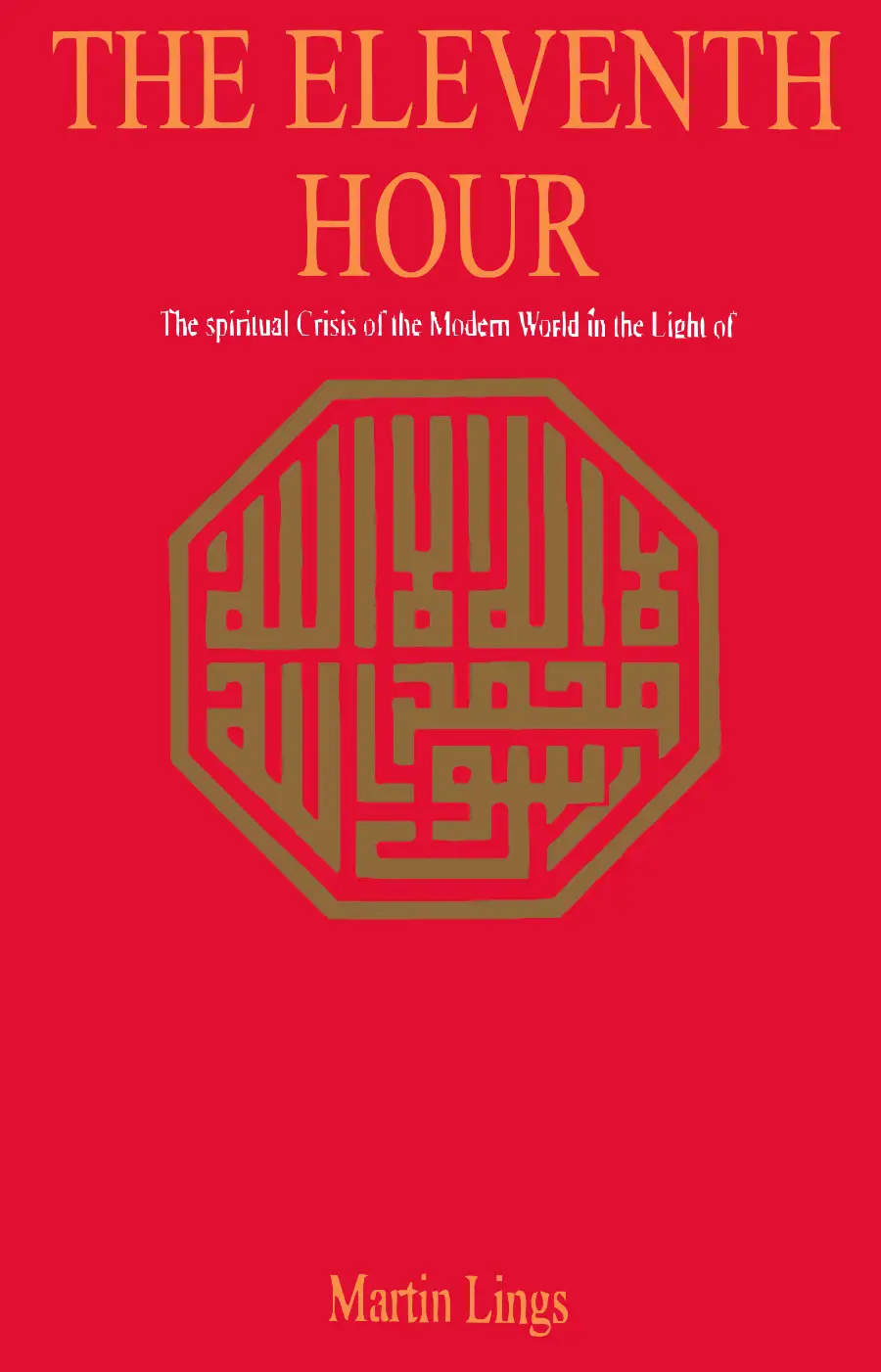
The Eleventh Hour
The Eleventh Hour
Save ₨200Featured
₨ 850Current price is: ₨ 850. Original price was: ₨ 1,050.
Availability: 1 in stock
Add to cart
Buy Now
The Eleventh Hour: The Spiritual Crisis of the Modern World in the Light of Tradition and Prophecy, published in 1987, is one of Martin Lings’ (Abu Bakr Siraj ad-Din) most urgent and “eschatological” works. While many of his other books focus on the beauty of Sufi doctrine, this work is a stern, traditionalist critique of the modern age.
Book Description
In this work, Lings applies the Perennialist perspective to the current state of humanity, arguing that we are living in the “Eleventh Hour”—the final moments of a major cyclic period (often identified with the Kali Yuga or the “End of Time”). He examines the rapid decay of spiritual values, the destruction of the natural environment, and the loss of “Intellectual” intuition in the West.
Lings uses both metaphysical principles and scriptural prophecies (from the Quran, the Bible, and other traditions) to explain why the modern world feels so chaotic. He suggests that the “crisis” is not merely political or environmental, but a profound spiritual bankruptcy resulting from humanity turning its back on the Absolute.
Key Points
1. The Doctrine of Cosmic Cycles
Lings relies on the traditional doctrine (shared by Hindus, Greeks, and Muslims) that time is not linear but cyclic. He argues that we are in the final, most “solidified” and “dark” stage of the cycle, where the distance between the human soul and its Divine Source is at its greatest.
2. The “Reign of Quantity”
Following the lead of René Guénon, Lings critiques the modern obsession with “more”—more speed, more technology, more material goods. He argues that this focus on quantity has completely stifled our appreciation for quality and the “sacred” dimension of existence.
3. The Loss of “Center”
The book describes the modern individual as “peripheral.” By rejecting a spiritual Center (God/The Absolute), humanity has become fragmented. Lings posits that modern “progress” is actually a centrifugal force that flings the soul further away from the Truth into a state of permanent distraction.
4. Signs of the “End of Time”
Lings correlates current world events—social upheaval, the blurring of gender roles, and the desecration of nature—with specific prophecies found in the Hadith and the New Testament. He views these “signs” not as coincidences, but as the inevitable symptoms of a world that has lost its metaphysical anchor.
5. The Destruction of Nature as Sacrilege
A poignant theme in the book is the environmental crisis. Lings argues that nature is a “Revelation” (a “Book” of signs). To destroy the environment is not just a biological error; it is an act of sacrilege because it destroys the symbols that allow the human soul to remember God.
6. The Remnant of Tradition
Despite the grim analysis, Lings offers a “hopeful” metaphysical conclusion. He suggests that for those who remain attached to a genuine Tradition (like Sufism), the very darkness of the age makes the “Light” more accessible. He encourages the reader to seek “the center of the cyclone”—a state of inward peace found through Dhikr and adherence to sacred law.
| Weight | 0.6 kg |
|---|
You must be logged in to post a review.


Related products
Save ₨250
What is Sufism by Martin Lings
₨ 1,250Current price is: ₨ 1,250. Original price was: ₨ 1,500.
The Tao of islam
₨ 2,000
Reviews
There are no reviews yet.