- Your cart is empty
- Continue Shopping


Survey of Metaphysics and Esoterism | Frithjof Schuon
Survey of Metaphysics and Esoterism | Frithjof Schuon
Featured
₨ 1,550
Author: Frithj of Schuon
Publisher: Suhail Academy
Pages: 230
Year of Publication: 2005
Binding: Hardbound مجلد
Dimensions: 22.5 * 14.5 cm
Weight: 0.50 kg
Availability: 2 in stock
Add to cart
Buy Now
Survey of Metaphysics and Esoterism (French: Résumé de métaphysique intégrale), published in 1986, is one of the most comprehensive and “distilled” works by the Swiss-German philosopher and Sufi master Frithjof Schuon (Isa Nur al-Din). It acts as a definitive summary of the Perennialist perspective on the nature of Reality and the path to its realization.
Book Description
In this work, Schuon moves beyond his earlier historical and cultural critiques to provide a rigorous, “integral” map of the metaphysical landscape. The book is known for its extreme conciseness and “intellectual density.” Schuon’s aim is to strip away all “accidental” forms of religion to reveal the Sophia Perennis (Perennial Wisdom)—the underlying truth that remains identical across all orthodox traditions.
The book is structured into four main sections:
Metaphysic: The study of the Absolute and the Degrees of Reality.
The Mystery of the Human Being: Psychology, the soul, and the intellect.
The Spiritual Life: The methods, virtues, and stages of realization.
The Universe of Forms: Aesthetics, sacred art, and the role of beauty.
Key Points
1. The Degrees of Reality (Atma and Maya)
Schuon uses the Vedantic concepts of Atma (The Absolute/Self) and Maya (The Relative/Manifestation) to explain the universe. He argues that while only Atma is “Real” in the absolute sense, Maya is “relatively real” because it is a radiation of the Divine. He breaks Maya down into several degrees, from the “Celestial” to the “Material.”
2. The Difference Between Soul and Intellect
A vital point in Schuon’s work is the distinction between the Soul (Nafs), which is individual and prone to passion, and the Intellect (‘Aql), which is universal and transcendent. He posits that the Intellect is “uncreated” at its core and is the faculty through which the human being can “know” God directly, without the mediation of reason.
3. The “Two Truths” of Esoterism
Schuon distinguishes between:
Exoterism: The “formal” side of religion (dogma, law, ritual) intended for the majority.
Esoterism: The “inward” side (metaphysics, gnosis) intended for the “intellectual elite” who seek to understand the why behind the what.
4. The Necessity of Virtue
Metaphysical knowledge, for Schuon, is useless without Virtue (Ihsan). He emphasizes that “to know the Truth is to be consumed by it.” The spiritual traveler must embody qualities like humility, charity, and veracity, as these are the “human reflections” of Divine Perfections.
5. The Role of Sacred Art and Beauty
Unique to Schuon’s metaphysics is the central role of Beauty. He argues that beauty is a “theophany” (a showing of God) that speaks directly to the soul. In this book, he explains how sacred art (like calligraphy or architecture) serves as a “support” for contemplation, helping the soul return to its primordial state.
6. The Universality of the Path
Schuon reinforces the idea that while the “forms” of religion differ (Islam, Hinduism, Christianity), the “essence” of the spiritual path is always the same: Discernment between the Real and the unreal, and Concentration on the Real (usually through Dhikr or Invocation).
| Weight | 0.5 kg |
|---|
You must be logged in to post a review.
Related products
Save ₨250
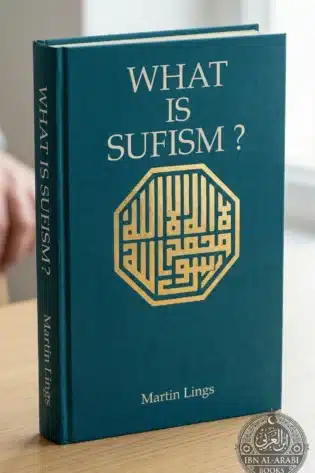
What is Sufism by Martin Lings
₨ 1,250Current price is: ₨ 1,250. Original price was: ₨ 1,500.
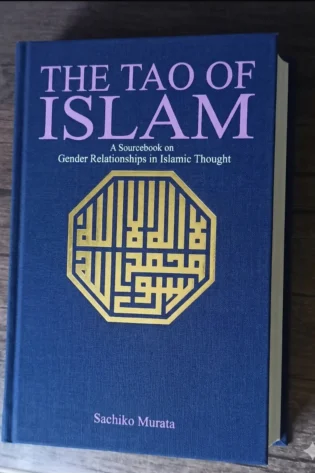
The Tao of islam
₨ 2,000
Reviews
There are no reviews yet.